Add Category: MAG Library

महिला, पुरुष या तेस्रोलिङ्गी जुनसुकै समुदायका निम्ति सूचना आफैँमा शक्ति हो, आत्मविश्वास हो । कुनै पनि विषयमा आफू जानकार हुनु र नहुनुबीचको भिन्नता ठूलो हुन्छ । तर, सूचनाको यो संसार महिलाका निम्ति अझै पनि दुरुह छ । नागरिक सचेतना र सशक्तीकरणका लागि सूचना अनिवार्य र महत्वपूर्ण मानिन्छ । आफ्नो देशका सार्वजनिक निकायमा कहाँ के भइरहेको छ भनेर जानकारी राख्नका लागि नेपाली नागरिकले कानुनी रूपमै सूचनाको अधिकार प्राप्त गरेका छन् । तर, मुलुकको आधा जनसङ्ख्यामध्ये अधिकांश महिला तथा तेश्रो लिङ्गीहरु यो कानुनी अधिकारको जानकारीबाट वञ्चित छन् । यी बर्गलाई केन्द्रित गरेर सूचनाको हकका अभियान त्यति भएका छैनन् । लैंगिक पृष्ठभूमिका कारण महिला स्वयम्मा पनि सूचना भनेको त पुरुषको पथमिकता र आवश्यकता हो, घरका पुरुष सदस्यले थाहा पाए त भइहाल्यो नि भन्ने सोच विद्यमान छ ।
नेपालमा सूचनाको हकसम्बन्धी ऐन ०६४ देखि लागू भएको छ । निकै लामो सङ्घर्षपछि प्राप्त सूचनाको हकसम्बन्धी कानुन निर्माण भएपछि जनताको सुसूचित हुने अधिकार सुनिश्चित हुने अपेक्षा गरिएअनुरूप बिस्तारै–बिस्तारै यो अधिकारबारे जनमानसमा जानकारी बढ्दै गएको छ । यद्यपि महिलामा भने सूचनाको हकसम्बन्धी कानुनको प्रयोगबारे जानकारी कम छ । सूचनाको हकको प्रयोगले सुशासन, पारदर्शिता र जवाफदेहितालाई बाध्यकारी ढङ्गले प्रोत्साहित गर्दछ । आफू जाने गन्तव्य, आफूले गर्ने काम, प्राप्त गर्ने सेवा–सुविधा, आइपर्न सक्ने कठिनाइबारे जानकारी पाए महिलाले वैदेशिक रोजगारीलगायतका क्षेत्रमा भोग्नुपरेको कठिनाइ कम हुन्छ । महिला भएकै कारणले महिला दुःखी भएका होइनन्, सशक्त नभएकाले दुःखी, पीडित बन्ने अवस्थाको सिर्जना भएको हो । सुसूचित हुनु या आफ्नो लागि आवश्यक विभिन्न विषयबारे जानकार हुनु सशक्तीकरणको महत्वपूर्ण सूचक हो । कुनै पनि नेपाली नागरिकलाई सूचना माग्ने अधिकार छ । सूचनाको हक भनेको सार्वजनिक निकाय तथा निकायमा रहेका जिम्मेवार व्यक्तिबाट भए–गरेका कामको व्यक्तिगत वा सार्वजनिक महत्वको सूचना माग्ने र पाउने अधिकार हो । कुनै पनि विषयमा जानकारी पाएपछि मात्रै व्यक्तिले सम्बन्धित विषयमा आफ्नो भूमिका निर्वाह गर्न सक्छ । त्यसैले सूचनाको हकलाई नागरिकको नैसर्गिक अधिकारका रूपमा लिइन्छ ।
नेपाली नागरिकले सरकारी निकायबाट मात्र होइन, कुनै पनि सार्वजनिक निकायबाट सार्वजनिक सरोकारका सूचनाका साथै आफ्नो सरोकारका सूचना माग्न सक्छन् । ती सूचनाका अभिलेख जाँच्न र प्रतिलिपि लिन सक्छन् । सूचनाको हकसम्बन्धी कानुन लागू भएपछि अब कुनै पनि सरकारी र सार्वजनिक निकायको काम गोप्य राख्नु या रहनु उचित मानिँदैन । यद्यपि हामीकहाँ कुनै महत्वपूर्ण सार्वजनिक पदको बहाली गर्दा गोपनीयताको शपथ खाने प्रचलन छ । तर, सूचनाको हकको अवधारणा भने पारदर्शिता र जवाफदेहितालाई प्रवद्र्धन गर्नुसँग सम्बन्धित छ । समयसँगसँगै अब देशको सुरक्षासँग सम्बन्धित केही संवेदनशील क्षति नपुग्ने गरी शपथको परम्परालाई पनि परिमार्जित गर्दै गोपनीयताबाट पारदर्शितातर्फ रूपान्तरण गर्नु आवश्यक देखिन्छ ।
नागरिकको सूचनाको हकबारे महिलालाई जानकारी गराई यसको प्रयोगलाई व्यापक बनाउन यो सामग्री प्रकाशित गरिएको हो । मूलतः विपद्को अवस्थापछिको पुनर्निर्माण, असुरक्षित वैदेशिक रोजगारी र चेलिबेटी बेचबिखनविरुद्ध सूचनाको हकलाई संयन्त्रका रूपमा प्रयोग गर्नका लागि निर्माण गरिने महिलाको समूहलाई दिने तालिमका लागि यो निर्देशिका निर्माण गरिएको हो। सूचनाको अधिकारको विषयलाई व्यापकता दिन, महिलालाई सुसूचित हुनका निम्ति अभिप्रेरित गर्न तथा सूचना माग्ने संस्कृतिको विकास गर्न सहयोग पुगोस् भन्ने उद्देश्यले महिलालाई लक्षित गरी निर्माण गरिएको यो सामग्रीले सूचनाको हकको प्रयोगबारे नागरिक तहमा सचेतना जगाउन महत्वपूर्ण भूमिका निर्वाह गर्न सक्ने छ ।
DOWNLOAD FULL GUIDELINE
Programs

Projects


Basic Write-Up Training Booklet
- Home
- Basic Write-Up Training Booklet

This booklet is prepared under the project implemented by Media Advocacy Group (MAG) in partnership with Global Fund and Geneva Global for the write-up skill training.
This booklet prepared for the two-days training for the trainee participants is focused on the practice of the basic skills of writing and journalism by imparting them knowledge on various aspects of write-up, journalism, and NEWS. The objective of this booklet is not to make the participants expert in professional journalism, rather to make them able to bring out the social issues to the general public by providing them the skills of journalism. So, in this training various aspects of NEWS or let’s say aspects of ‘Soft News’ are included more than that of the aspects of ‘Hard News’.
In this training, skill based approach is adopted rather than scholarly and theoretical knowledge. This training is targeted to the journalists and those activists having interest in writing to take the activities from their working area, success stories, case studies and feature to the media. After the completion of the training, the trainees are expected to be able to take their writings not only to the mainstream media, but also in the social media too.

DOWNLOAD FULL BOOKLET
Basic Write-Up Training Booklet
Programs
Projects
Right based training manual for Journalists
- Home
- Right based training manual for Journalists

The role of journalists today is not restricted to reporting the world’s events and conveying information to the people only, but they are taken as important agents in creating public awareness and educating the public on their rights which will help in monitoring the practices of human rights in our daily life. Journalists carry the ability to inform the public, to connect remote community, and to shape an individual’s knowledge and understanding of the world where they live in. Rights issues get into the coverage of media but they have hardly led the story.
Though the media has been covering the news to aware the public of their rights, they miss human rights stories because they do not pay attention to the specific legal and policy implications it might have. This is because many journalists do not have adequate knowledge of human rights and its relevance to the material they are covering. The media therefore frequently miss the context of human rights stories. So, the media have a professional duty to understand what these rights are, in order to be able to describe events and explain them to their audiences.
Media Advocacy Group with the financial and technical support from UN Women has prepared ‘Right Based Training Manual’ for journalist under the project ‘ Strengthen collective capability of the media to implement gender responsive reporting’, for media persons of all levels in Nepal. The manual will be applicable as reference guide to trainers, concerned government organizations, private organizations and individual freelance consultants who wish to conduct training on Right based issues including Gender issues both in national and district level.
Programs
Projects
Right To Information Toolkit
- Home
- Right To Information Toolkit

सूचना आफैमा शक्ति हो , आत्मविश्वास हो । कुनै पनि कुरामा आफू सुसूचित हुनु र नहुनुबीच आकाश–जमिनको फरक हुन्छ ऋब्११।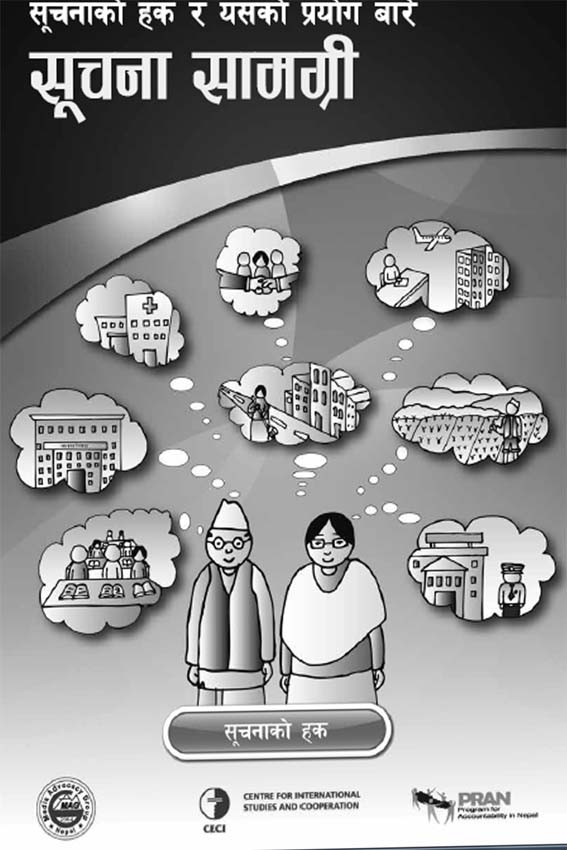 नागरिक सचेतना र सशक्तीकरणका लागि सूचना महत्वपूर्ण छ । आफ्नाा देशका सार्वजनिक निकायमा कहाँ के भइरहेको छ भनेर जानकारी राख्नका लागि नेपाली नागरिकलाई कानुनी रूपमै सूचनाको अधिकार छ । नेपालमा सूचनाको हकसम्बन्धी एेन २०६४ सालदेखि लागू भएको हो । निकै लामो सङ्घर्षपछि प्राप्त सूचनाको हकसम्बन्धी कानुन निर्माण भएपछि जनताको सुसूचित हुने अधिकार सुनिश्चित हुने अपे क्षा गरि एको थियो । तर सूचनाको हकसम्बन्धी कानुनको प्रयोगबारे जनस्तर मा जानकारीको कमीका कारण अपेक्षित लक्ष हासिल गर्न सकिएको छैन । सूचनाको हकको प्रयोगले सुशासन, पार दर्शिता र जवाफदे हीलाई बढावा दिन्छ ।
Programs
Projects
Booklet of Citizen Awareness for the Use of Right to Information
- Home
- Booklet of Citizen Awareness for the Use of Right to Information

Information is power. It builds self-confidence. There is a huge difference on whether you are well informed or not. 
 Information is also a key to awareness and empowerment. People of Nepal have the legal right to know what is going on in their public offices all over the country. Implementation of the Right to Information (RTI) in Nepal has been guaranteed both in the Constitution since 1990 and by an act of Parliament since 2007. Following the enactment of this law, one had expected that people’s right to know will be fully respected. However, despite its enactment and despite the formation of National Information Commission, the exercise of this right has so far been weak. The situation in Nepal suggests a very gloomy picture of people’s participation in governance. In reality, a large number of people are denied participation in governance and they do not have access to information about government decision- making processes.
Programs
Projects
Basic Journalism Training Manual
- Home
- Basic Journalism Training Manual
यो पुस्तिका युने स्को को “सञ्चारको विकासकालागि अन्तर्राष्ट्रिय कार्यक्रम” (आई.पी.डी.सी.) को सहयोगअन्तर्गत युनेस्को काठमाडौ कार्यालय र मिडिया एड्भोकेसी ग्रुपद्वारा संयुक्त रूपमा आयोजित पत्रकारिता तालिमका लागि तयार पारिएको हो ।
यस पाँच दिने तालिमले सहभागी प्रशिक्षार्थीहरूलाई पत्रकारिता, पत्रकार एवं समाचारका विभिन्न आयामबारे ज्ञान गराउँदै समाचार संकलन तथा लेखन (न्यूज रिपोर्टिङ्) का आधार भूत सीपहरूको अभ्यासमा जोड दिएको छ । पत्रकारिता अन्तर्गत विभिन्न कार्यहरू गरिने भए तापनि समाचार संकलन र समाचार लेखन पत्रकारि ताको आधार शिला मानिन्छ । तसर्थ यो तालिममा पनि समाचा र संकलन तथा लेखनको पक्षलाई केन्द्रमा राखिएको छ । तालिमका विधि एवं क्रियाकलापको योजना गर्दा समाचार लाई पत्रकारले रिपोर्टिङ् (संकलन एवं लेखन) तथा सम्पादन गरी उत्पादन गर्ने विशेष किसिमको सूचना मानी समाचा र उत्पादन प्रक्रियामा आवश्यक पर्ने दक्षताको अभिवृद्धि होस् भन्ने कुरालाई ख्याल राखिएको छ ।
पत्रकारिता बौद्धिक ज्ञान र व्यावहारिक सीपको समुचित संयोजन आवश्यक पर्ने पेसा हो । तसर्थ पत्रकारिताका औपचारिक उपाधि प्रदान गरिने शैक्षिक÷प्राज्ञिक कार्यक्रम तथा तालिम दुवै थरीमा यस्तो समुचित संयोजन आवश्यक हुन्छ । तथापि तालिम भन्नासाथ व्यावहारिक सीपको नै प्रधानता हुन्छ र सोहीअनुरूप पत्रकारिताका कुनै पनि तहका तालिममा सीपमूलक दृष्टिकोण अवलम्बन गरिनु स्वाभाविक मानिन्छ । यस तालिममा पनि सीपमूलक दृष्टिकोण नै अवलम्बन गरिएको छ ।